How I "Manufactured" $2.1M of Equity in 30 Days (Before the Deal was even Final)
The "Office-to-Equity" Glitch: A $100k Fit-out vs. a $2.2M Valuation Jump.
Most people wait for the market to go up. I prefer to make it happen myself.
Last year, I came across a deal that most "casual" investors would have skipped. It was a pair of commercial buildings sitting side-by-side. On paper, it looked okay, but the "vacancy" in the second building was scaring away the standard buyers.
- Building 1: 100% tenanted (Solid retail).
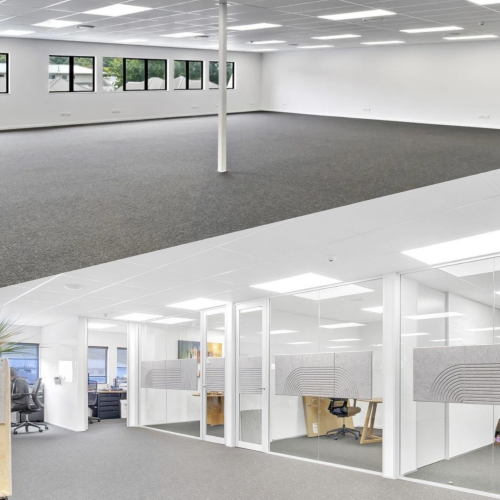
- Building 2: 50% tenanted (Ground floor retail only). The entire second floor—two separate office spaces—was sitting empty.
The Entry Strategy: The 7.5% Trap
I secured the purchase of both buildings for $2,000,000.
I based this offer on a 7.5% Capitalisation Rate (See: How to Value a Property) using only the actual income from the existing tenants. Because of the vacancy, I knew the $2M price tag was already undervalued, but I needed a way to prove that to the bank.
I put 30 Working Days of Due Diligence (DD)(See: The DD Checklist) on the contract. This gave me 6 weeks to find a "solution" for that empty top floor before I had to commit a single cent of a deposit.
The Move: Creating the "Anchor" Tenant
Within the first 10 days of my DD period, I used my network to find a tenant who didn't just want one office—they wanted the whole top floor.
The catch? They needed the two separate spaces merged and a custom fit-out.
- The Cost: $100,000 for the works.
- The Total Project Cost: $2,100,000 ($2M purchase + $100k fit-out).
The Result: A 6.5% Re-Valuation
Before I went Unconditional(See: Glossary of Terms), I took the draft lease from this new tenant to a registered valuer.
The valuer didn't just look at the building anymore; they looked at the guaranteed future income. Because the building was now "fully tenanted" with a high-quality office user, the valuer dropped the Cap Rate from 7.5% down to 6.5% (reflecting the lower risk).
The new valuation came back at $4,240,000.
I had "created" over $2 Million in equity before I had even officially bought the building. Needless to say, I hit the "Unconditional" button immediately.
The "Value-Add" is easy to describe, but the execution is where the $2M is won or lost.
If I had signed that lease incorrectly, or if the fit-out had triggered a Change of Use with the council, my $100k budget would have ballooned to $400k, and my "sure thing" would have been a disaster.
Inside the Subscriber-Only Deep Dive, I’m breaking down:
- The "Draft Lease" Clause: The exact wording I used to ensure the tenant was locked in before I spent a dollar on the fit-out.
- Fit-out Depreciation: How I’m writing off that $100k against my tax bill over the next 5 years(See: The 2026 NZ Tax Guide).
- The Valuation Brief: The 3-page document I gave to the valuer to "encourage" them to use a 6.5% Cap Rate instead of the market average.
So what happened with this deal?
These properties were profiting roughly $50,000 per annum as passive income, and we had zero investment capital left in the building, so 100% debt.
That sounds good right?
As a professional, we understand that it is unlikely that we will achieve valuations in reality, so we chose to list this property on the market with an idea of generating at least $1,000,000 of real profit.
The property was listed and achieved in excess of $3.4m which meant we had achieved our goal.
What would we sell it?
It's incredibly important to continously calculate return on cost and return on value, then make a decision on best use of capital. We chose to reinvest this profit elsewhere.
When should you sell and when should you keep?